Everest Base Camp Packing List (2026 Insider Guide): What You Actually Need
- Use the 3-layer system: base, insulation, outer shell
- Bring broken-in waterproof trekking boots
- A -15°C sleeping bag is essential
- Don’t skip trekking poles, headlamp, and water purification
- Small items like Diamox, sunscreen, and blister plasters can save your trek
Introduction
Most Everest Base Camp trekkers don’t fail because of fitness.
They fail because they pack wrong.
At 5,364 meters, conditions are extreme:
- Temperatures drop below -20°C
- Oxygen levels are low
- Weather changes hourly
👉 The right gear is not optional. It’s survival.
In this guide, I’ll show you:
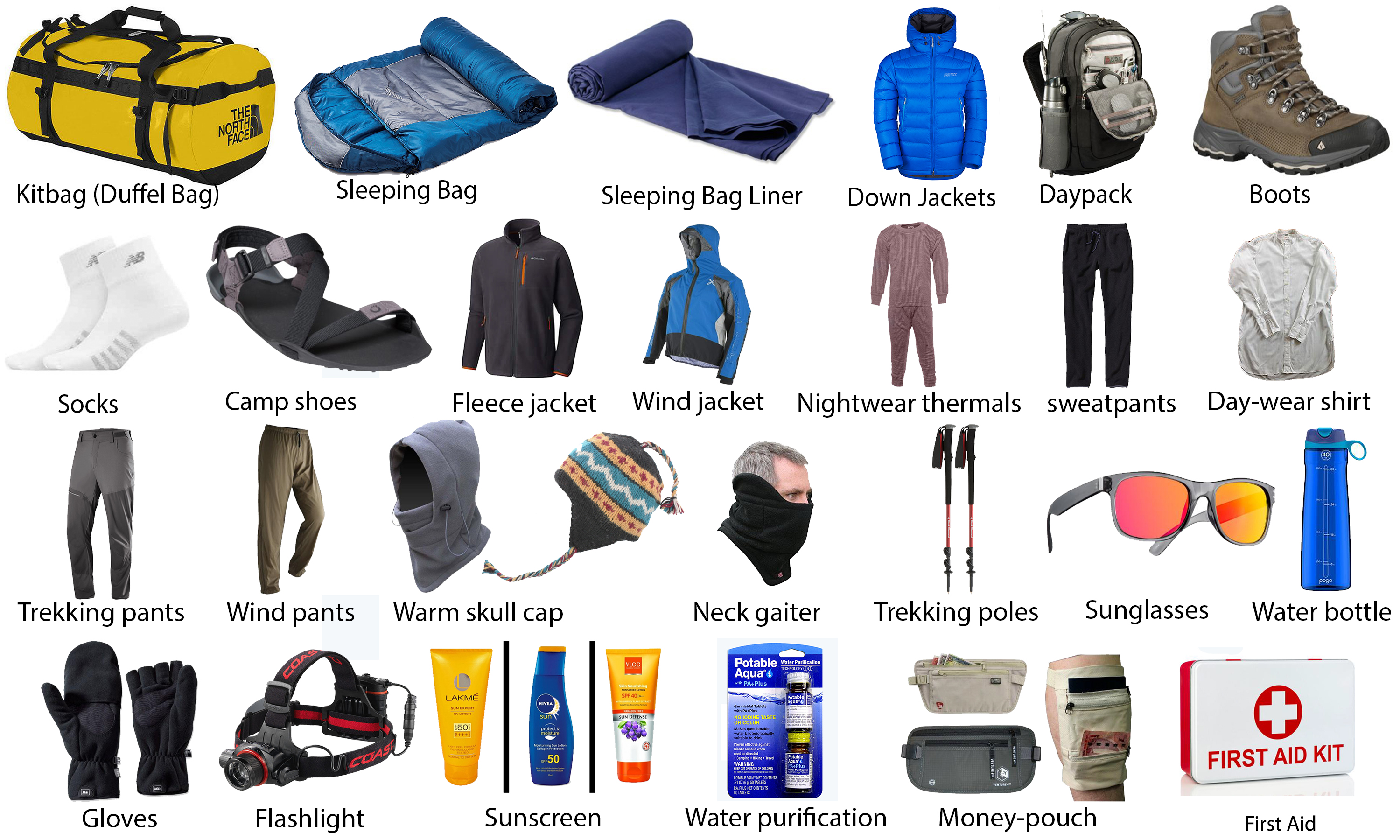
- Exactly what to pack
- What most people forget
- What you can rent vs bring
What clothes do you need for Everest Base Camp? (3-Layer Rule)
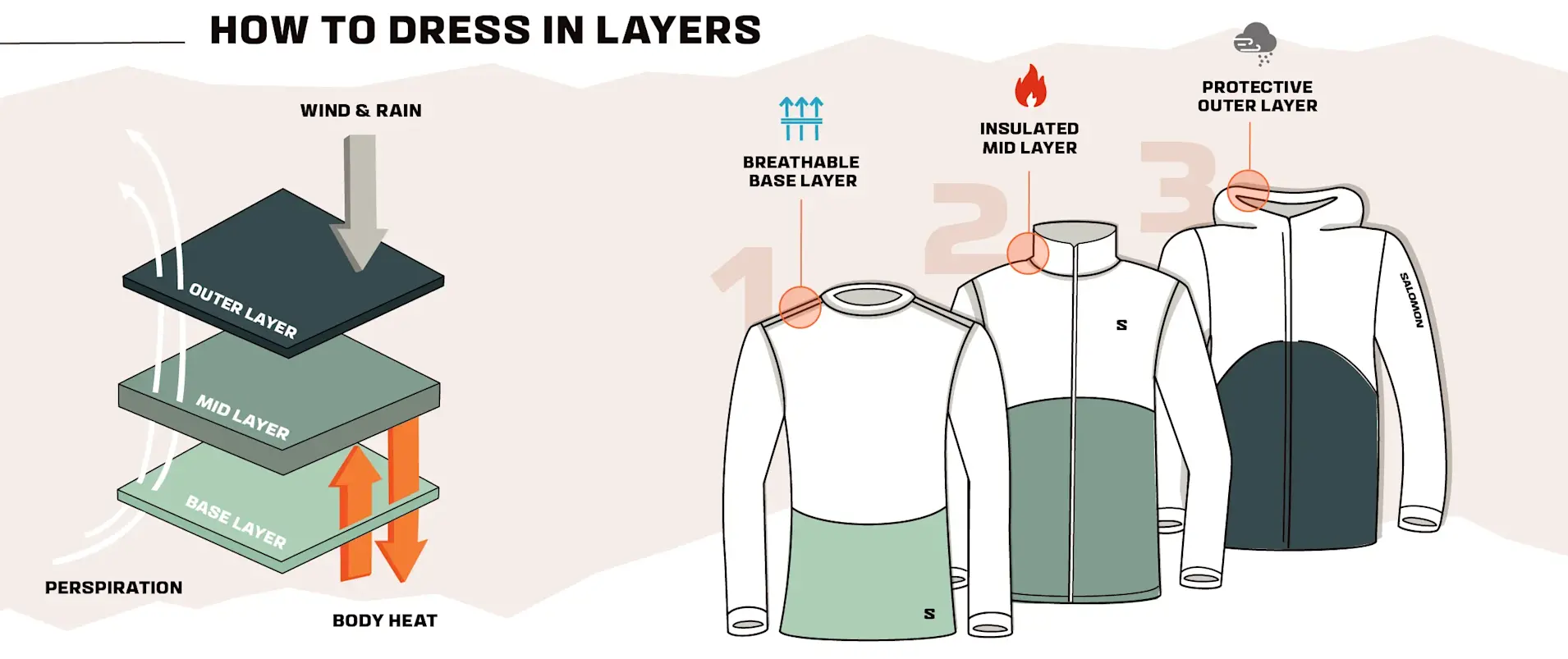
Image Source: Salomon
You need a 3-layer clothing system to stay warm, dry, and adaptable in changing Himalayan weather.
1. Base Layer (Moisture Control)
- 2 sets of merino wool or synthetic thermals
- Wicks sweat away from your body
👉 Avoid cotton: it traps moisture and increases risk of hypothermia
2. Middle Layer (Insulation)
- 1–2 fleece jackets or lightweight down jackets
👉 This layer keeps your body heat in
3. Outer Layer (Protection)
- 1 heavy down jacket (-20°C rated)
- 1 waterproof/windproof shell (Gore-Tex recommended)
👉 This protects you from:
- Wind
- Snow
- Sudden weather shifts
What footwear is best for Everest Base Camp?

Source: Glorious Himalaya
Waterproof trekking boots with ankle support are the most important gear for the EBC trek.
Must-have footwear:
✔ Trekking Boots
- Waterproof
- High ankle support
👉 Break them in 1–2 months before your trek
👉 Blisters = trek ruined
✔ Camp Shoes
- Sandals or Crocs
👉 Your feet need recovery after long hiking days
✔ Socks
- 4–5 wool trekking socks
- 2 liner socks (prevent blisters)
What essential gear do you need for Everest Base Camp?

Source: Let's Meet Aborad - Youtube
Key gear includes a sleeping bag, daypack, trekking poles, and a headlamp.
Core gear checklist:
🛏️ Sleeping Bag
- Rated to -15°C to -20°C
👉 Teahouses provide blankets, but they’re not enough
🎒 Daypack (25–35L)
- Carry:
- Water
- Snacks
- Camera
- Rain gear
🥾 Trekking Poles
- Reduce strain on knees
- Essential for descents (especially Kala Patthar)
🔦 Headlamp
- Required for early morning summit hikes (Kala Patthar at 4 AM)
What small items are essential for Everest Base Camp?
Small items like water purification, first aid, and sun protection can make or break your trek.
🔹 Water Purification
- LifeStraw or Aquatabs
👉 Saves money and reduces plastic waste
🔹 First Aid Kit
Include:
- Diamox (altitude sickness)
- Ibuprofen
- Blister plasters
👉 Altitude sickness is the #1 risk
🔹 Sun Protection
- SPF 50+ sunscreen
- Polarized sunglasses
👉 UV exposure at 5,000m is up to 50% stronger
What you DON’T need to bring (save money)
You don’t need to buy expensive gear before your trip.
👉 You can rent in Kathmandu (Thamel):
- Down jackets
- Sleeping bags
💰 Cost: $1–$2 per day
👉 This can save you $300–$500+
Frequently Asked Questions
Q: Can I buy or rent gear in Kathmandu?
Yes. Thamel has many shops offering high-quality gear rentals for $1–$2/day.
Q: What is the weight limit for Lukla flights?
The limit is 15kg total (10kg checked + 5kg carry-on). Pack light.
Q: Do I need a sleeping bag for Everest Base Camp?
Yes. Teahouse blankets are not enough at high altitude.
Q: Are trekking poles really necessary?
Yes. They reduce knee strain, especially on steep descents.
Q: Can beginners pack everything themselves?
Yes, but following a proven checklist is critical to avoid mistakes.
Here’s the truth:
- Packing right = successful trek
- Packing wrong = suffering or failure
👉 Focus on:
- Layering system
- Proper boots
- Essential gear
👉 Next step: Start packing early and test your gear before the trek.