Is Sleeping Beauty Still on Mount Everest in 2026? (Latest Update)
-
“Sleeping Beauty” (Francys Arsentiev) is no longer clearly visible on Mount Everest in 2026
-
Her body was visible for years but has likely been moved, covered, or buried by snow
-
Over 200 bodies still remain on Everest
-
Bodies are left due to extreme danger, cost, and logistics
-
Everest’s freezing conditions can preserve bodies for decades
Introduction

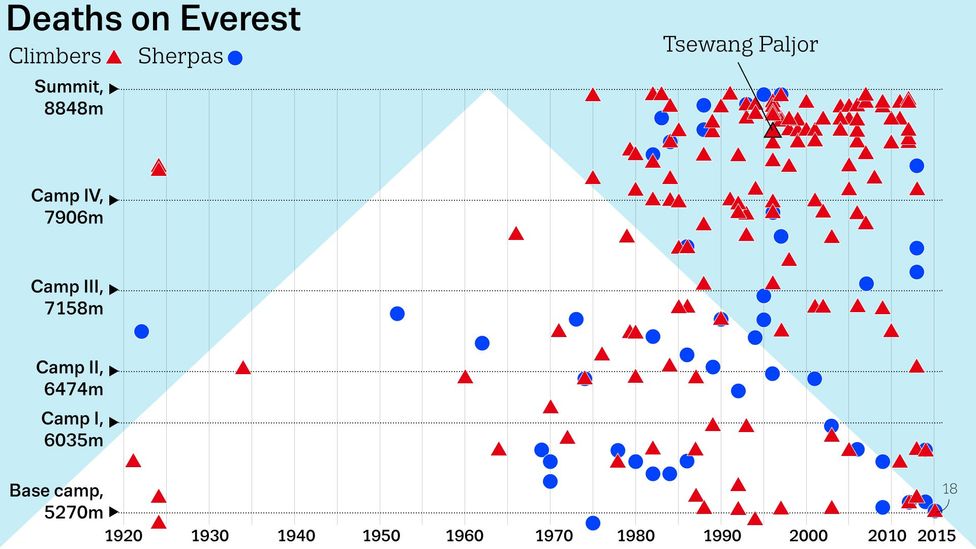
More than 200 bodies are still on Mount Everest, many of them frozen in place for decades [Source: BBC News]. That number alone explains why one question keeps coming up:
Is “Sleeping Beauty” still on Everest today?
If you’ve read about Everest or seen viral posts, you’ve probably come across the story of Francys Arsentiev, one of the most well-known climbers who died on the mountain.
Here’s exactly what I’ll break down:
-
Whether her body is still visible in 2026
-
What actually happened to it
-
Why bodies remain on Everest
-
What happens to them over time
Is Sleeping Beauty Still on Everest?
Source: Nepal Trekking Info
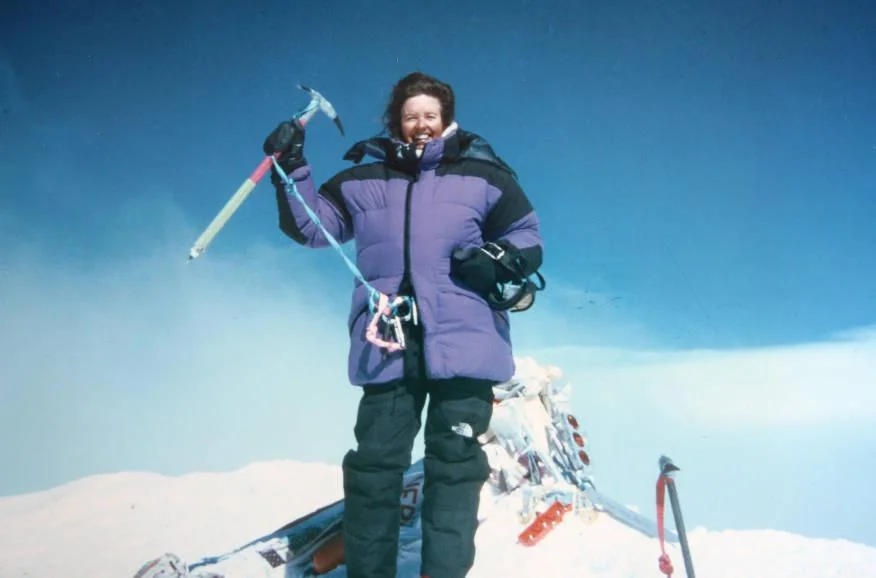
Short answer: No, she is no longer clearly visible in 2026.
For years, climbers reported seeing the body of Francys Arsentiev along a popular route near the summit. She became a known landmark in the Death Zone.
But today, that’s no longer the case.
Recent climber reports suggest:
-
Her body is not visible on standard routes anymore
-
The area has changed due to snow and route shifts
-
Climbers rarely mention her in modern expedition logs
This is a major shift from the early 2000s when sightings were common.
Has the Body Been Moved?

Source: Los Angles Times
Yes, it has most likely been moved or deliberately concealed.
There isn’t a single official “removal record,” but multiple sources confirm that efforts were made over time.
Efforts by Climbers
Some climbers and teams took action out of respect:
-
Attempted to relocate the body off the main path
-
Covered it using snow or gear
-
Avoided drawing attention to the site
According to reports cited by Reuters, cleanup and body relocation efforts have increased in recent years.
Natural Changes on Everest
Even without human intervention, Everest constantly changes:
-
Snowfall can bury bodies completely
-
Ice movement can shift locations
-
Wind exposure can uncover or re-cover remains
So even if a body isn’t formally “removed,” it can still disappear from view.
Why Are Bodies Left on Everest?
Source: World Atlas
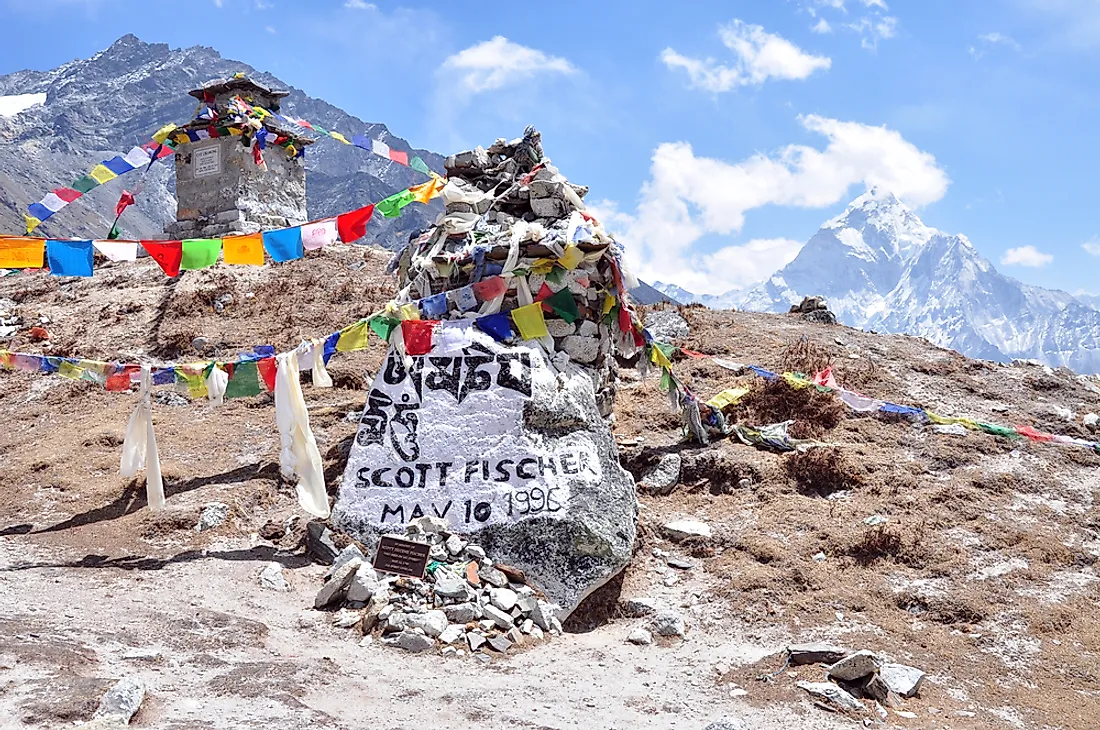
Because recovering them is extremely dangerous, expensive, and often fatal.
This is one of the hardest truths about Everest.
1. The Death Zone Is Lethal
Above 8,000 meters:
-
Oxygen drops to ~33% of sea level
-
The body begins shutting down
-
Survival time is extremely limited
Trying to recover a body here can easily turn into another fatality.
2. The Cost Is Massive
| Factor | Estimated Cost |
|---|---|
| Recovery team | $20,000+ |
| Logistics + oxygen | $10,000+ |
| Total recovery cost | $30,000–$70,000+ |
Most families simply cannot afford this.
3. Physical Difficulty
-
Frozen bodies become rigid and heavier
-
Terrain is steep, icy, and unstable
-
Carrying weight at high altitude is extremely dangerous
Even elite climbers struggle to move safely without extra load.
4. Survival Comes First
There’s an unspoken rule on Everest:
You cannot risk your life to save or recover someone else in the Death Zone.
This is exactly what happened in cases like Francys Arsentiev, where climbers encountered her but couldn’t safely rescue her.
What Happens to Bodies on Everest Over Time?
Source: Live Science
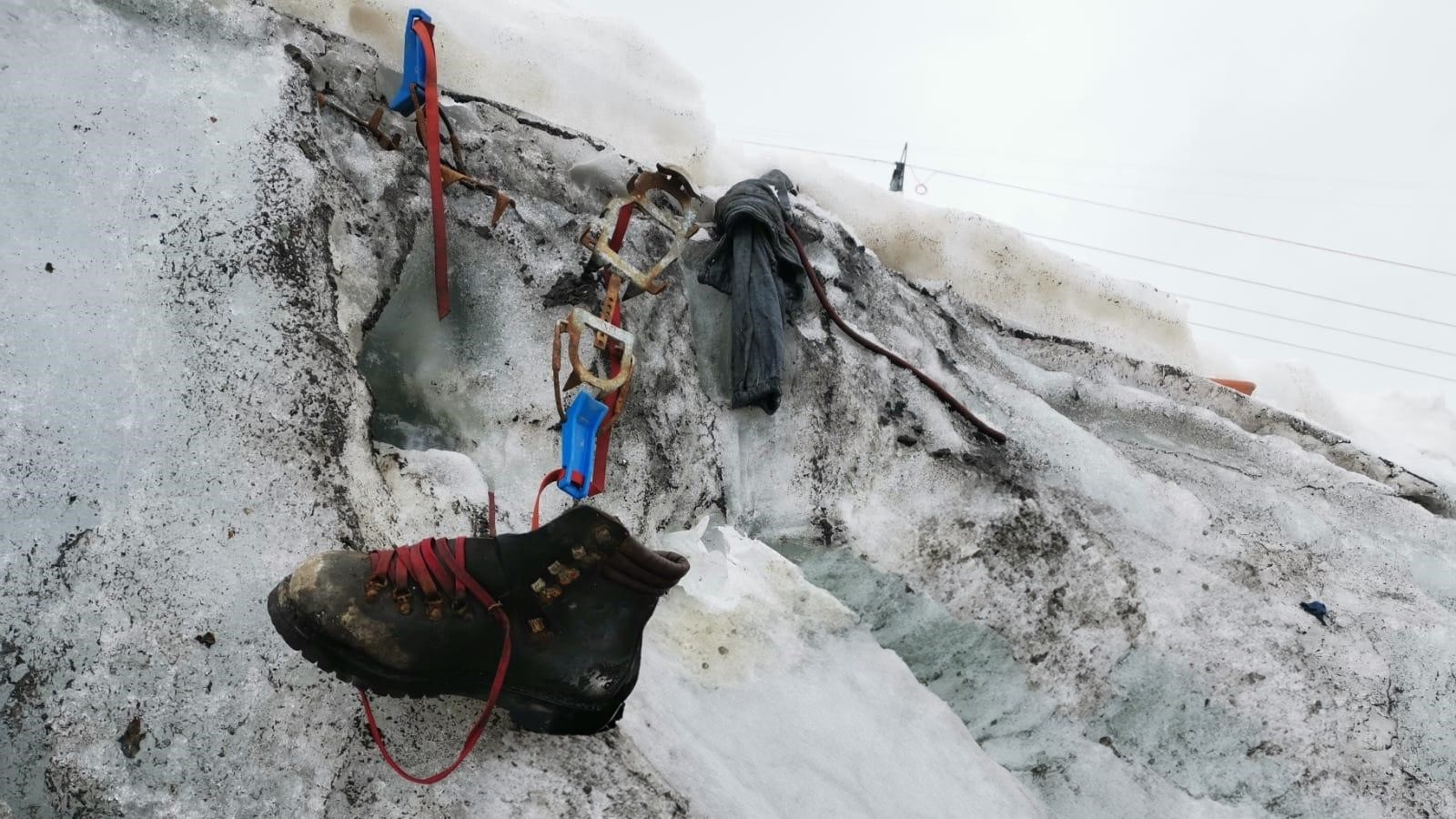
Bodies on Everest freeze and remain preserved for decades, with very slow environmental changes.
Natural Preservation
According to Smithsonian Magazine:
-
Temperatures drop below -30°C (-22°F)
-
Bacteria cannot function normally
-
Decomposition is almost completely halted
This creates a “natural freezer” effect.
Long-Term Changes
Over time, bodies may:
-
Become buried under snow
-
Shift due to glacier movement
-
Be exposed again due to wind erosion
This is why some bodies appear and disappear over years.
Why Was Sleeping Beauty Visible for So Long?
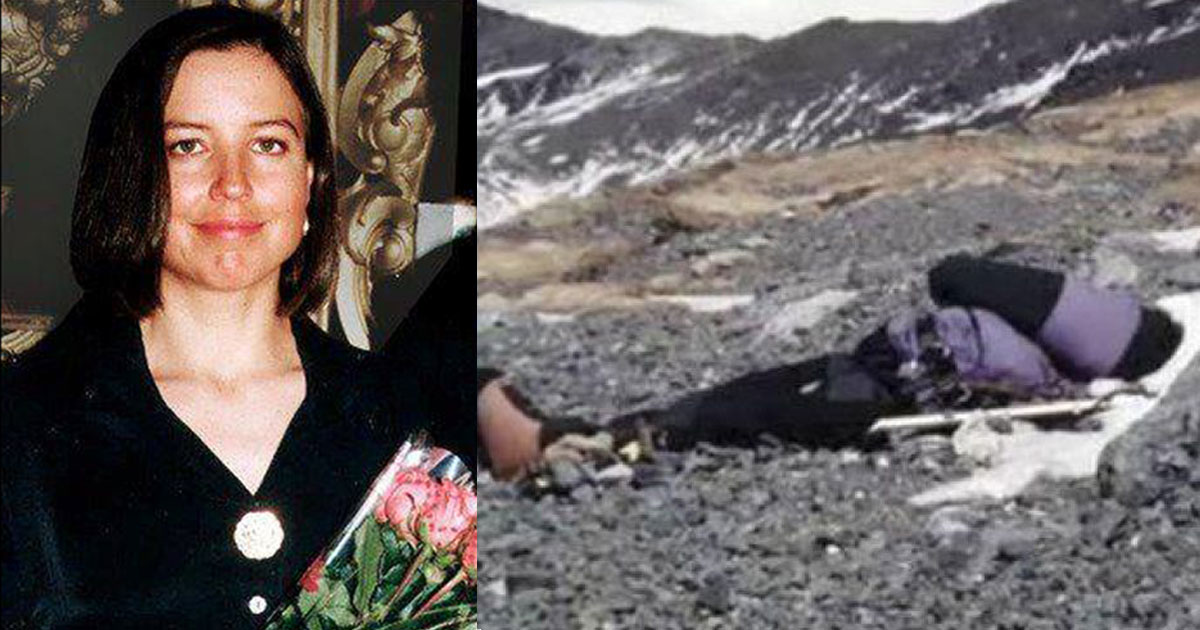
Because she was located on a main climbing route and preserved by extreme cold.
Her position near what climbers call Rainbow Valley made her highly visible:
-
Thousands of climbers pass that route
-
Her body remained exposed for years
-
The preserved condition made it recognizable
According to Outside Magazine, many climbers described her as appearing peaceful, which contributed to the nickname “Sleeping Beauty.”
Do Climbers Still See Bodies Today?
Source: BBC
Yes, but fewer than before.
Modern climbers still report seeing bodies, but:
-
Many are now covered or moved off main paths
-
Ethical awareness has increased
-
Expedition companies discourage using bodies as landmarks
Compared to 20 years ago, visibility has significantly decreased.
Sleeping Beauty is no longer visible, but Everest still contains over 200 bodies. The mountain hasn’t become safer. It has only become more discreet.
FAQ
Q: Is sleeping beauty still on Mount Everest?
A: No, she is no longer clearly visible. Her body has likely been moved, covered, or buried over time.
Q: Has sleeping beauty been removed from Everest?
A: While not officially documented, climbers have made efforts to move or conceal her remains, and natural conditions may have buried them.
Q: Why are bodies not removed from Everest?
A: Because recovery is extremely dangerous, expensive, and physically difficult in the Death Zone.
Q: How many bodies are still on Mount Everest?
A: Estimates suggest over 200 bodies remain on the mountain [Source: BBC News].
Q: Can bodies disappear on Everest?
A: Yes. Snowfall, glacier movement, and wind can bury or shift bodies over time.
Q: Do climbers still see dead bodies on Everest?
A: Yes, but fewer than in the past, as many have been covered or moved off main routes.
Conclusion
If you’re looking for a clear answer:
Sleeping Beauty is no longer visible on Mount Everest in 2026.
But the bigger reality is this:
-
Everest still holds hundreds of bodies
-
The risks of climbing haven’t changed
-
The mountain simply hides its dangers better today
If you’re exploring Everest stories, this is just one piece of a much larger picture.
Next step:
Read the full breakdown of her story and location Sleeping Beauty Everest full guide